
Contacts
1108, The Orion, Sarkhej – Gandhinagar Hwy, near Shree Balaji Temple, Ahmedabad, Gujarat 382481.
Organic traffic growth year over year
Keywords ranking in Google top 10
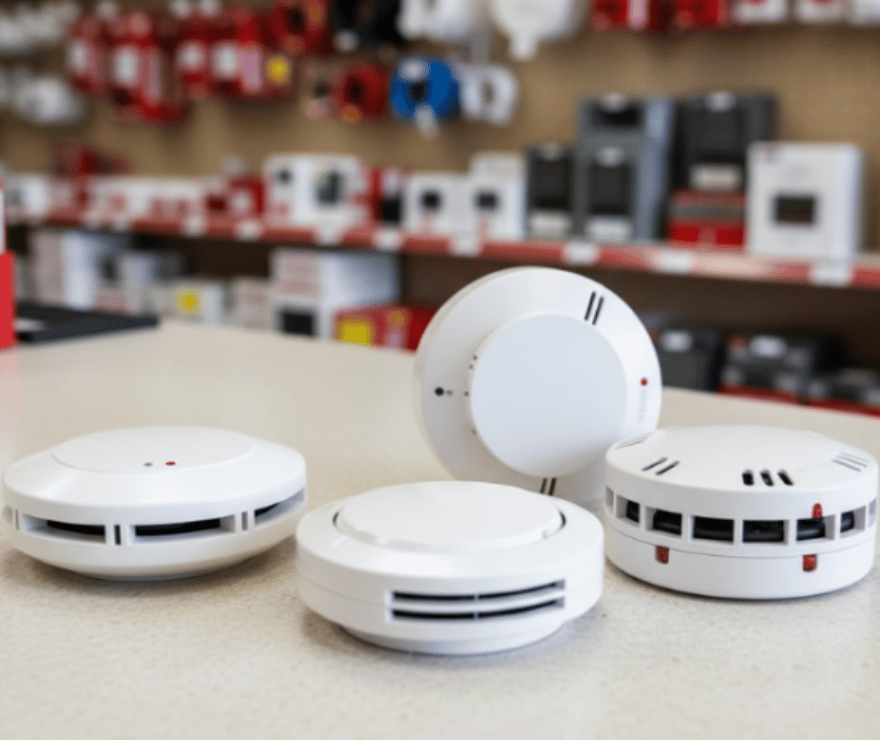
Quickship Fire is a USA-based B2B e-commerce supplier specializing in fire alarm systems, control panels, and hard-to-find alarm components not a generic fire safety store, and not a fire extinguisher-focused business. Their actual specialization is fire alarm parts and system components including smoke detectors, fire alarm control panels, interface modules, pull stations, detector bases, duct detectors, and power supplies.
Their audience is specifically professional contractors, fire safety technicians, facility managers, and integrators not end consumers. The USP is fast shipping across all 50 US states with a physical presence in Prunedale, California, but the business model is pure e-commerce with nationwide delivery, not local service. SEO needed to target the long-tail, part-number-specific searches professionals actually use.
Fire safety industry publications, contractor trade resources, facility management publications, and fire safety association citations. Quality links in the specific niche.

Web clicks from GBP
Because part-number searches signal the highest possible purchase intent. A contractor searching ‘SD 500 MIM’ isn’t researching, comparing, or browsing they need that exact module, often urgently, often for a job already in progress. Part-number traffic converts at multiples of the rate of category-level traffic because the buyer arrives already qualified to purchase the specific item. The challenge is that individual part-number search volumes are small, so the strategy has to capture many part numbers at once rather than chasing high-volume terms. We built systematic part-number coverage across the catalogue with proper specification depth, compatibility data, and availability signals. The aggregate of many small-volume high-intent queries produced more revenue impact than chasing a smaller set of high-volume low-intent terms could have.
By treating it as a structured information problem rather than a content-volume problem. Thousands of SKU pages cannot each have hand-written marketing copy, so the strategy relied on structured data depth rather than narrative depth. Each product page received standardised specification structure (manufacturer, compatibility, certifications, voltage, application), proper schema markup, and category-relevant internal linking. Category pages provided the editorial depth buying guides, application contexts, compatibility matrices that lifted the entire SKU set into authority. We also tackled crawl budget rigorously: the catalogue had been wasting Google’s crawl resources on faceted URL parameters and variant duplicates, so canonical strategy and parameter handling came first. Without that foundation, no amount of content would have been indexed reliably.
Because it captures the buyer at exactly the moment they’re choosing a system architecture, not just buying a single component. A facility manager or contractor searching ‘addressable fire alarm system’ is evaluating an entire technology category they will subsequently search for panels, modules, and detectors that fit that architecture. Ranking for the category-defining term puts the supplier in the consideration set for the full subsequent purchase journey. This is fundamentally different from ranking for an individual product category authority compounds across many downstream transactions. We invested in deep content around addressable system architecture, compatibility, and application precisely because that authority radiates into all the component-level searches that follow. Category-defining keywords are the highest-leverage SEO investments in B2B e-commerce.
Contractors are typically time-pressured, working from job specifications, and searching for specific part numbers or compatibility-verified replacements. Their content needs are minimal confirm the part, confirm availability, place the order. Facility managers are typically researching system options for a building they’re responsible for, often without specialised fire safety expertise, and need education-level content explaining categories, compliance requirements, and selection criteria. The same site needs to serve both: contractors land on product and SKU pages with technical depth and immediate purchasing paths; facility managers land on category and educational content with explanation, compliance context, and supplier credibility. We built distinct content paths for each, and conversion improved on both because each finally had content built for their actual research process.
Product schema is foundational manufacturer, SKU, GTIN where available, price, availability, condition. Beyond product schema, the differentiating markup includes: specification structured data covering the technical attributes contractors verify before purchase, compatibility information surfaced as structured data so buyers can confirm fit before adding to cart, and review markup where genuine reviews exist. For larger orders, organisation and service schema reinforces the supplier’s B2B credibility. Schema doesn’t directly create rankings, but it creates rich result eligibility and signals that compound with content quality. In B2B specialty e-commerce, schema is a meaningful ranking and click-through driver not just metadata, but a structural ranking input.
Indirectly but significantly. Fast shipping isn’t a direct ranking signal, but it’s a primary differentiator in fire safety e-commerce contractors urgently needing parts choose suppliers who can ship same-day or next-day every time over slower alternatives. Surfacing fast shipping prominently on product pages, category pages, and through schema offer markup affects click-through rates and conversion rates, both of which feed back into ranking signals over time. Beyond on-page surfacing, fast shipping became a content angle in itself content built around urgent procurement, emergency replacement parts, and rapid-fulfilment fire safety supply captured a high-intent traffic stream that competitor sites without that capability couldn’t authentically match. Service capability that’s surfaced strategically becomes an SEO advantage even when it’s not a direct ranking factor.
Through canonical strategy that respects manufacturer differences while consolidating where appropriate. A smoke detector base from one manufacturer is fundamentally a different product from a smoke detector base from another they’re not duplicate variants, they’re competitive products contractors evaluate based on compatibility with their installed systems. Each manufacturer-specific product gets its own indexed page with proper schema. Within a single manufacturer’s product line, however, true variants the same part in different packaging quantities, for instance get canonical consolidation to the parent product page to avoid crawl waste and ranking dilution. The distinction matters: collapsing genuinely different competitive products into one page hurts ranking for both manufacturer-specific searches; failing to consolidate true variants wastes crawl budget. Getting this architecture right was foundational to the entire ranking improvement.
Our buyers are fire safety contractors who search by exact part numbers, and Mpiric was the first agency to actually understand that. They built our SEO around the long-tail technical queries addressable fire alarm systems, specific module SKUs, control panel categories that contractors actually use. Our B2B traffic and qualified contractor enquiries have grown substantially, and we're now ranking on page one for the part numbers our customers search for daily.
Let’s beginHave a question or a project in mind?
Connect with our experts to explore your needs, get tailored solutions, and move your business forward with the right strategy and technology.
127 West 30th Street 9th Floor New York City, NY 10001
12 The Pagoda Maidenhead Berkshire SL6 8EU
+447341216019